Over 2024–2025 we completed more than 40 apartments with bespoke design in Tbilisi. Analysing client requests and the results we deliver, we see consistent patterns — not in the sense of "what's trending on Instagram" but what actually works well in Georgian apartments with their specific floor areas, ceiling heights and climate. Here are our observations, straight to the point.
Context: the characteristics of Tbilisi apartments
Typical new-builds in Tbilisi are concrete shells of 55–85 m² with a budget turnkey finish: white machine-applied plaster, laminate flooring, a bathroom with basic 300×600 tiles. The historic housing stock of Sololaki and Mtatsminda is the other extreme: high ceilings of 3.2–3.8 m, timber-beam floors, spaces with character — but worn-out services.
Clients from both segments come with the same request: "I want something different, not like everyone else." This opens the door to unconventional solutions — provided you understand the constraints of the specific property.
Trend 1. Minimalism with a warm accent
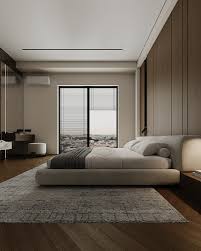
Neutral base + one accent material
White or light-grey walls (Tikkurila Y498 "Quiet Cove" or Dulux 00NN 83/000), engineered light-oak flooring, minimal furniture. One accent — a slatted wooden panel on the wall behind the bed, an arched opening instead of a standard door, or exposed brickwork on the kitchen splashback. No mixing of styles.
Why this works specifically in Tbilisi: the compact floor plans of new-builds (55–80 m²) demand visual breathing room. Minimalism creates the illusion of space better than any structural alteration. And a bonus — this kind of interior does not feel dated after two years.
Materials we use: Ivory or Ash oak veneer, Category A paints (no odour, fast-drying), decorative gypsum wave panels — lighter than natural stone and requiring no wall reinforcement.
Trend 2. Scandinavian style adapted to the climate
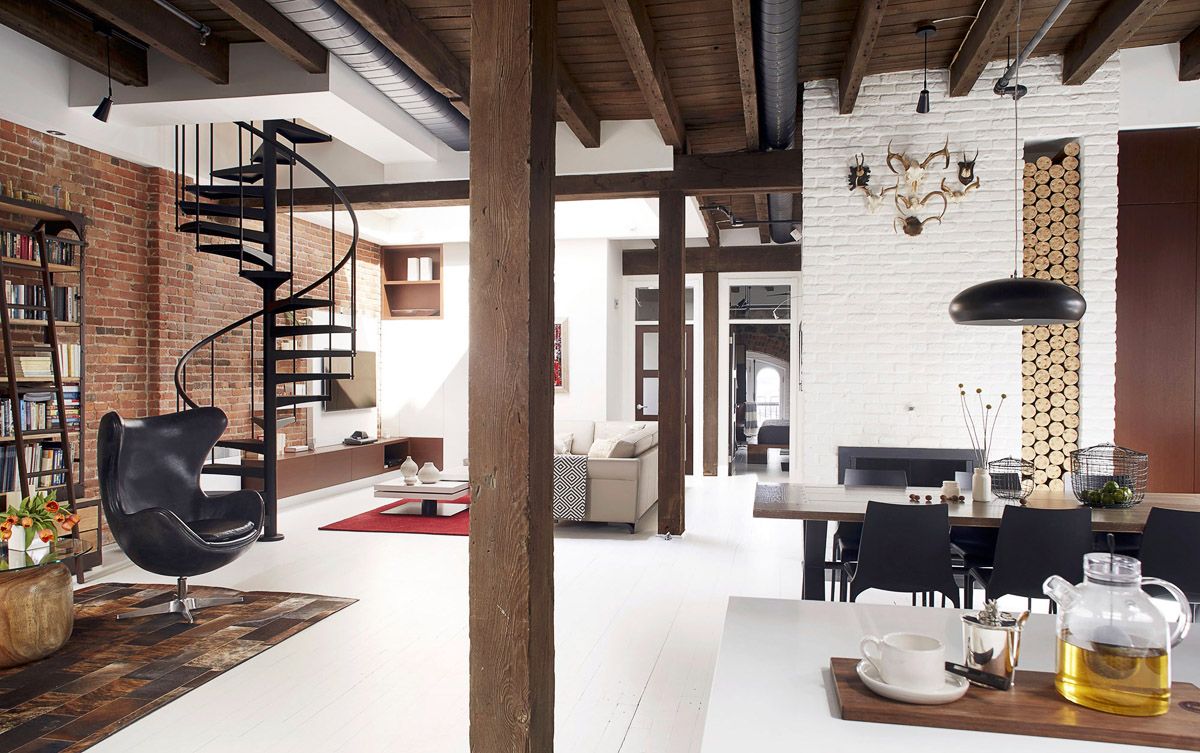
Light wood, textiles, functionality
Scandinavian style is not "pure IKEA". It is a principle: every object serves a function, light matters more than décor, materials are natural. In Tbilisi it gets adapted: the cool grey is removed and replaced with warmer tones — ochre, terracotta, olive. This works with the Georgian sun: in summer warm tones do not visually "overheat" the interior; in winter they create cosiness.
What we take from Scandinavian: open shelving instead of wall-hung cabinets, built-in lighting in niches, light birch or ash. What we add locally: solid wooden doors, forged handles, a terracotta accent as a single feature wall.
Details that make the difference: natural textiles (linen, cotton) — no synthetics. Curtains to the ceiling, even if the window is small. This visually adds 30–40 cm to the perceived ceiling height.
Trend 3. Loft with history — a Tbilisi specialty
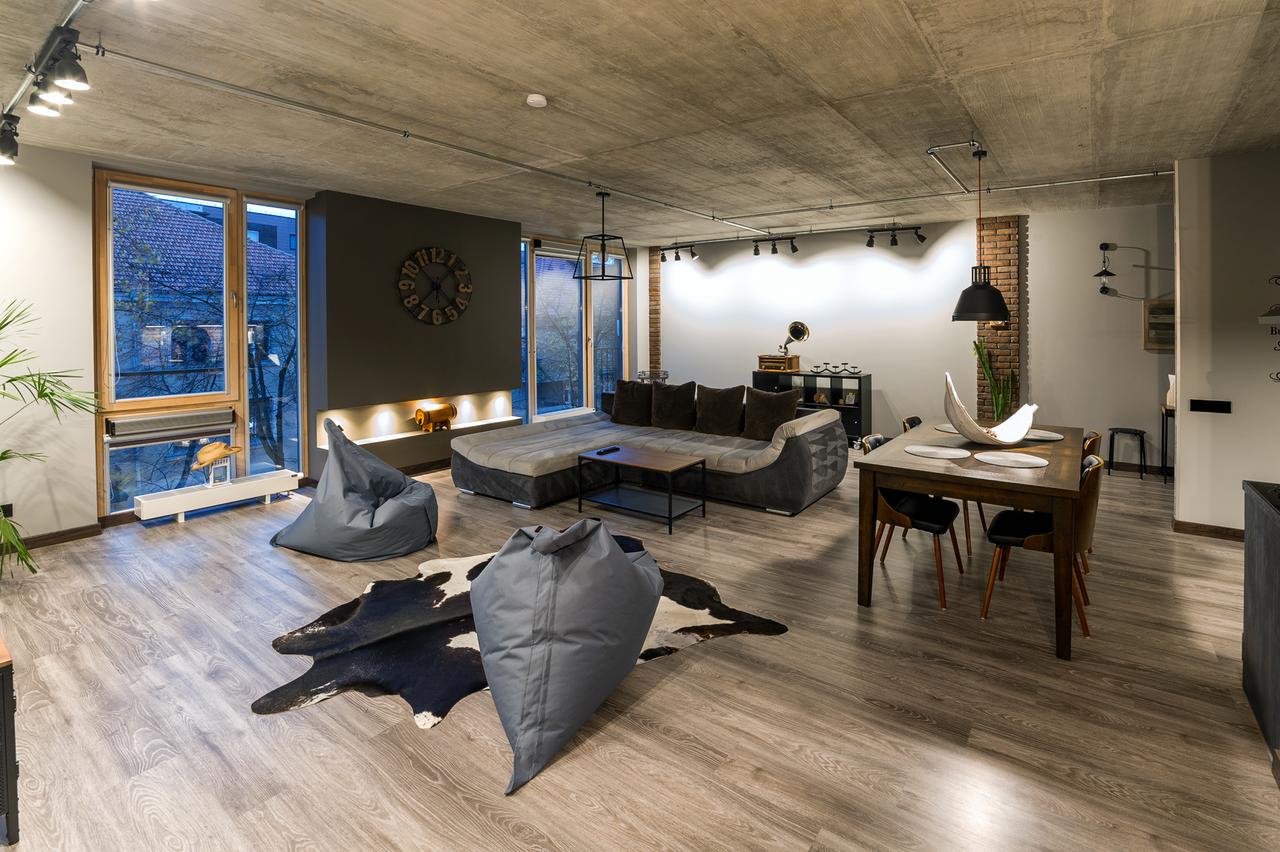
Exposed brick, metal, history
In old Tbilisi buildings — Rustaveli, Sololaki, Vere — masonry from the 19th and early 20th century is often hidden beneath plaster. We strip it back by hand, treat it with a protective compound, and end up with a surface you simply cannot buy in a shop. The brickwork is 100–130 years old, and that reads clearly.
The rest of the interior is built around this wall: metal partitions with matte glass, exposed pipes at ceiling level (painted black RAL 9004), timber beams where the structure permits. The remaining walls are calm, warm plaster — no competition with the accent.
An important nuance: a loft apartment is not a warehouse. Storage goes in closed, built-in wardrobes. Only things that are beautiful in themselves are left on display. Chaotic "industrialism" looks cheap; structured industrialism looks expensive.
Trend 4. Dark kitchen and open-plan living
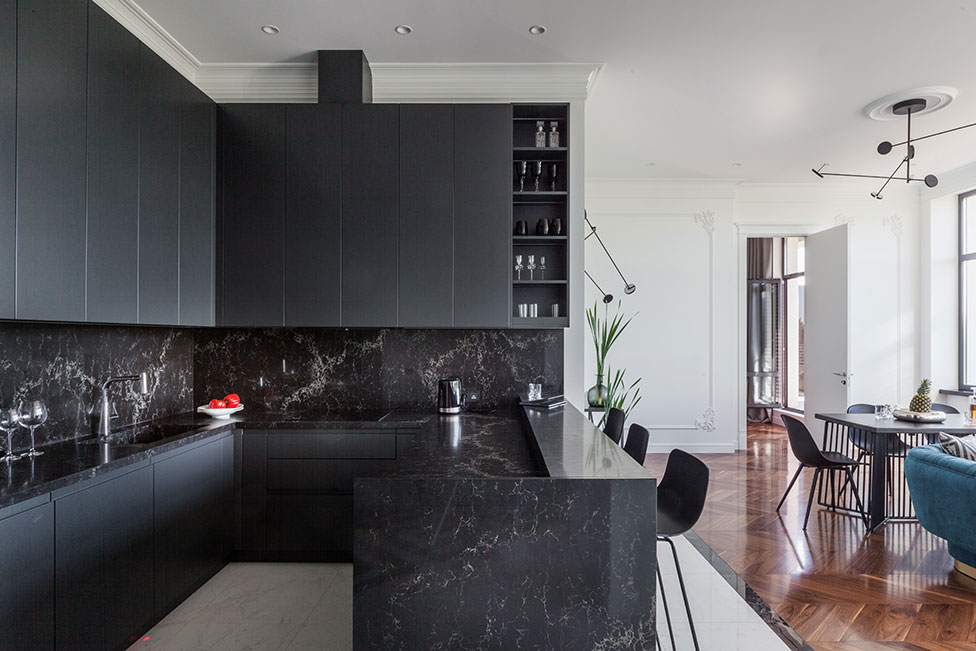
Dark kitchen + merging with the living room
A dark kitchen suite — anthracite RAL 7016, graphite RAL 7024 or deep green BS 12C39 — against light walls creates a cinematic contrast. Cabinet fronts: matte lacquer or veneer with no gloss (gloss shows fingerprints and looks cheaper than it appears in the catalogue). Worktop: 20 mm engineered quartz or natural marble, depending on the materials budget.
A parallel trend: merging the kitchen and living room by removing a non-load-bearing wall. In the Soviet-era floor plans typical of Tbilisi this is possible in the majority of cases. The result is a +20–30% gain in perceived space and a fundamentally different way of living in the apartment.
Essentials for a dark kitchen: a powerful extractor (minimum 700 m³/h), contrasting task lighting over the worktop (LED 4000K, CRI 90+), light-coloured ceilings — otherwise the kitchen starts to feel oppressive.
Trend 5. Biophilia: nature as an architectural element
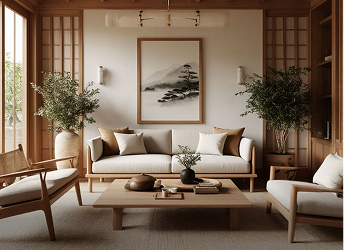
Living materials and plants as part of the interior
Biophilia is not "putting a rubber plant in the corner". It is the deliberate integration of natural materials: unfinished wood (oil or wax, not lacquer), natural stone in the bathroom (travertine, slate), living moss on a panel in the hallway. Tbilisi's climate allows a wide range of plants to be kept indoors without grow-lights — 230–260 sunny days a year make biophilia practical, not merely decorative.
Popular solutions we implement: a built-in plant niche with drip tray and lighting, a vertical kitchen garden (basil, rosemary, parsley — fully functional), jute and raffia as zone-dividing textiles.
The main rule of biophilia: everything must be living or natural. Plastic "plants" and stone imitations cancel out the entire effect.
What is fading out
A practical note on light in Tbilisi apartments
Tbilisi has a lot of sun — and that is a resource to be used. French windows without heavy curtains, light-coloured ceilings, minimal partitions between the window and the living space deliver more than any design trick. Artificial lighting should be layered: general (downlight 3000K), task (neutral 4000K over the desk and kitchen), accent (on bookshelves, artwork, a green corner). A dimmer on each zone is not an option — it is standard.
Frequently asked questions
Which colours are on trend now?
Muted earthy and warm neutral tones — beige, warm grey, terracotta, olive, with accents of natural wood and stone.
What style for a rental apartment?
Neutral warm minimalism — it appeals to a broad tourist audience and rents more easily. Avoid very niche solutions.
Is a fashionable interior expensive?
Not necessarily: layout, lighting and a couple of accent materials create the effect, not expensive furniture. A design project starts from $25/m².
What visually enlarges a small apartment?
Large-format tile with one continuous pattern, hidden doors matched to the wall colour, built-in lighting and minimal contrasting borders.
Want a design consultation?
We'll show examples from our projects and discuss what actually works in your apartment.
Book a consultation →